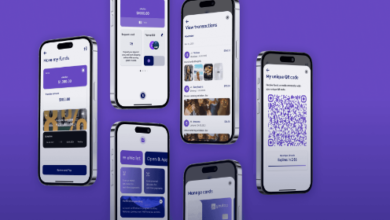
Owning a business is like sailing a ship; you require tools to guide your way. Employee monitoring software gives business owners greater insights into business operations while simultaneously demanding the trust of employees. Employee monitoring software transforms the way in which teams operate, and because its benefits can be quite powerful, many businesses struggle to face its hurdles. For this reason, today’s discussion will rely on the Controlio App as a case study and explore both its pros and cons while sharing personal experiences.
The Gains: Increased Efficiency and Valuable Data
The effectiveness of company monitoring software is best illustrated as a window into the operating workday of your employees. A workday is made up of many tasks, and tracking is done per task. Thus, employees can be made more efficient by identifying over the long term processes that they can streamline. An example of this is a small design team I managed where we corrected time lost as a result of unclear workflows. Through the Controlio app, we managed to track over-communication during revision cycles and eliminate them afterward. This improvement in feedback automation enabled project turnaround times to be decreased by 20% without any additional exertion.
These tools function as employee desserts for workers. One designer was able to realize that she was spending too much of her time on very small tweaks because of her time logs. As a result, she added limits to these small tweaks, which increased her output. Besides, accurate time logs ensure proper payment for work done, eliminating potential errors. In the past I have had issues with clients disputing payments; however, in one of these cases, data monitoring showed hours worked and provided evidence that saved the dispute.
Improving Monitoring Software Security and Compliance
Every organization dreads data leaks. Monitoring software works like digital guards and can scan for file downloads that are not authorized as well as other activities. There was this tool that we used in one of my previous roles, and it was able to stop an accidental data share from sharing documents that were very sensitive, which would have led to a disaster. Some sectors, like healthcare or finance, require more advanced protection; therefore, tools like the Controlio App are useful because they guarantee that such industries meet GDPR or HIPAA by monitoring data access and creating reports that are ready for audits.
Keeping a check on remote employees is very important, and this becomes critical for remote teams because it helps to focus on company-issued devices and how they are used, be it at the company’s office or a café. This helps tighten documents or data used and is therefore locking away your organization from issues.
See also: How Software Fitpukweb Is Reshaping the Business Landscape
The Downside: Technology’s Impact on Surveillance and Employee Well-being
Surveillance has both advantages and disadvantages. Employees have valid privacy concerns, and if they feel like there are excessive surveillance practices, it could lead to reduced motivation. A study conducted this year showed that 59 percent of employees feel stressed when monitored too much. I saw the same thing with the first implementation of the monitoring software. Some team members were concerned that it was going to be misused. We kept open meetings focused on assuring employees that only work-related items were going to be tracked, easing their fears.
Trust can easily be eroded by overly invasive technologies that monitor personal messages and track keystrokes. There must be a balance between boundaries and focus on work-related data to avoid making employees feel they’re under careful examination.
Striking the Right Balance
Effective surveillance hinges on openness. Tracking things like task reporting or app usage and clearly stating the rationale helps set precise goals for the team. In my experience, data has been beneficial in improving workflows. Sharing data showed that there was unnecessary overtime, and that got everyone on board. Granting employees limited access to their relevant data promotes self-correction with the potential to transform surveillance into a self-improvement tool.
Avoid selective monitoring to prevent resentment. Enforce policies on all staff, from interns to executives. Ensure that data is being monitored ethically, focusing on trends like task bottlenecks instead of on individual mistakes.
Getting Started Thoughtfully
Ready to explore monitoring? Begin by selecting a tool that fits your needs. For smaller teams, simple time tracking may be sufficient. For larger teams, robust security features will be necessary. Test it with a pilot group as I did to smooth out the kinks. Provide clear step-by-step training. Show managers how to interpret reports and demonstrate time logging to employees.
Use analytics to optimize performance. Weekly reviews can uncover chronic inefficiencies, such as consistently overrunning tasks. I once noticed that meetings were dragging on longer than necessary, so I adjusted the duration to 15% less. Streamlined operations can maximize ROI. This is further possible through integrations with tools like Asana or QuickBooks.
Final Note
In today’s modern control systems for businesses, office simulation software such as the Controlio App serves as a compass. While it helps improve security and productivity and facilitates remote work, it still calls for a careful strategy to mitigate privacy concerns. Striking a balance between transparency and privacy is necessary, but with a focus on trust, the same technology can be harnessed to improve productivity greatly.
So, which area of your business would you optimize? Careful monitoring will ensure that your employees are able to optimally utilize the control systems, which in turn serves to elevate productivity!